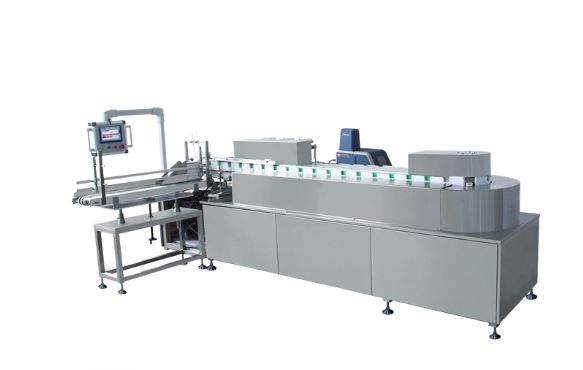
Tuesday morning. Time to change from a small carton to a large carton. You grab your Allen keys. You loosen eight guide rails. You slide them to new positions. You tighten them. You measure. They are off by two millimeters. You loosen again. You adjust again. You tighten again. You measure again. Finally, after forty-five minutes, the rails are correct. Now you adjust the carton picker. Now you adjust the glue nozzle height. Now you adjust the compression belts. Two hours later, you run your first carton. It jams. You start over. This is not a cartoning machine. This is a punishment. A modern machine uses servo-driven adjustments. You enter the new carton size on a touchscreen. The guide rails move automatically. The picker adjusts automatically. The glue nozzle repositions automatically. The changeover takes three minutes. Ask your supplier about motorized changeovers. If they offer only manual adjustments, ask yourself how many Tuesdays you are willing to lose. Your time is valuable. Your machine should respect that.
The Changeover Part Cart That Costs Ten Thousand Dollars
Your current cartoning machine requires different parts for different carton sizes. A different picker head. A different folding box. A different glue nozzle adapter. You buy these parts. You store them on a cart. That cart holds ten thousand dollars worth of changeover parts. You use each part once per week. The rest of the time, the parts sit on the cart. They gather dust. They get lost. They get damaged. A flexible cartoning machine uses adjustable parts that cover a range of sizes. One picker head handles small to medium cartons. One folding box adjusts from fifty millimeters to one hundred fifty millimeters. No changeover parts. No cart. No ten thousand dollars of idle inventory. Ask your supplier about their size range per part. If they sell you a different part for every size, they are maximizing their revenue, not your efficiency. Adjustable parts cost more upfront. They save money every time you change over. That saving adds up fast.
The Recipe Storage Lie That Forgets Your Settings
Your machine has recipe storage. You saved the settings for the small carton. You changed over to the large carton. You saved those settings. Next week, you recall the small carton recipe. The guide rails move to the correct positions. The glue temperature sets correctly. The compression belt pressure adjusts. But the carton picker timing is wrong. The glue delay is wrong. The reject station sensitivity is wrong. Your recipe did not save every parameter. Only the obvious ones. The hidden parameters you must set manually every time. A complete cartoning machine recipe saves every single adjustable parameter. Not just the ones on the main screen. The ones buried in service menus too. Ask your supplier to demonstrate a full recipe recall. Watch them load a recipe. Watch every parameter change automatically. If they click through multiple screens or manually enter values, their recipe system is incomplete. Complete recipes save time. Incomplete recipes save nothing. Demand completeness.
The Mechanical Stop That Requires A Calibration Every Time
Your guide rails move to a mechanical stop. A bolt hits a block. That is the position for the small carton. You change over to the large carton. The rails move to a different mechanical stop. This works. Until the bolt loosens. Until the block wears. Until someone bumps the stop during cleaning. Your cartoning machine now thinks it is in the correct position. It is not. Cartons jam. You recalibrate. You waste another hour. The solution is absolute positioning encoders. No mechanical stops. The motor knows exactly where the rail is at all times. Power off. Power on. The encoder remembers. No calibration. No drift. No guessing. Ask your supplier about encoder feedback. If their machine uses limit switches or mechanical stops, your changeovers will drift over time. Drift creates jams. Jams create downtime. Encoders cost more. They also eliminate an entire category of frustration. Your sanity is worth the upgrade.
The Tool Storage That Invites Theft
Your machine came with special tools. A unique wrench for the glue head. A special gauge for the carton picker. An odd-sized hex key for the guide rail locks. These tools live near the machine. They grow legs. They walk away. The next changeover, you cannot find the special wrench. You use pliers. You damage the glue head. The repair costs five hundred dollars. A well-designed cartoning machine uses standard tools only. Common hex keys. Common wrenches. Common screwdrivers. Nothing unique. If a tool is lost, you buy another at the hardware store for three dollars. Ask your supplier about their tool requirements. If they list any custom or uncommon tools, ask why. The answer is usually poor design that requires odd fasteners. Standard fasteners exist. Standard tools exist. Your machine should use them. Your maintenance team will thank you every time they open the tool drawer and find exactly what they need.
The One Upgrade That Cuts Changeover Time By Eighty Percent
Look at your changeover process. How many steps require tools? How many steps require measuring? How many steps require trial and error? Now imagine a machine where every adjustment is toolless. Spring-loaded detents. Magnetic stops. Color-coded positions. You change a guide rail by squeezing two handles and sliding. The rail clicks into position for the small carton. A different color mark shows the position for the large carton. No tools. No measuring. No guessing. This upgrade exists. It is called a toolless changeover system. Some cartoning machine manufacturers offer it. Most do not because it adds cost. Ask your supplier if they offer toolless changeovers. If they say no, ask if they can build one for you. If they say that is too expensive, calculate your annual changeover time. Multiply by your labor rate. Multiply by five years. That number is the cost of not having toolless changeovers. Compare that number to the upgrade price. The math will surprise you. Toolless changeovers pay for themselves. Quickly. Your Tuesdays will finally be productive again.