Rideshare services have transformed transportation across California, but they have also created new legal challenges when accidents occur. Many people assume Uber and taxi accident claims are handled the same way. In reality, they follow very different legal and insurance structures. A knowledgeable Uber accident attorney near me understands that these differences can directly affect how liability is determined, how compensation is pursued, and how quickly claims are resolved.
If you were injured in a rideshare or taxi accident, understanding these distinctions can help you protect your legal rights and maximize financial recovery.
Employment Status Creates Major Legal Differences
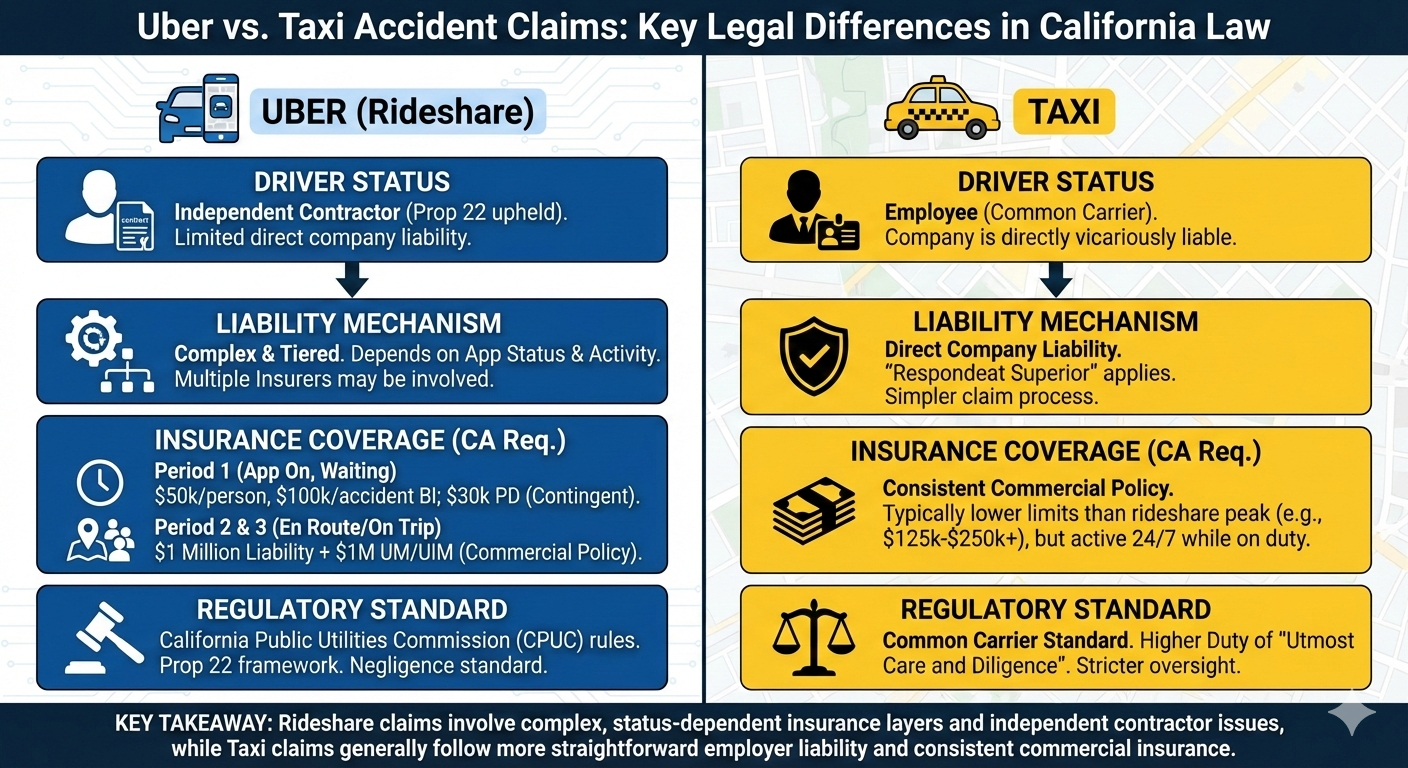
One of the biggest legal differences between Uber and taxi accidents involves how drivers are classified. Taxi drivers are typically employees of taxi companies or operate under regulated transportation businesses. Because of this, taxi companies can often be held directly liable for driver negligence under employer responsibility laws.
Uber drivers, however, are generally classified as independent contractors. This classification limits Uber’s direct liability in some situations and shifts focus toward rideshare insurance policies instead of employer liability. This distinction often makes Uber accident claims more complex and heavily dependent on insurance coverage layers.
Insurance Coverage Structures Are Significantly Different
Taxi companies usually carry commercial insurance policies that apply whenever the driver is operating the vehicle for business purposes. Coverage is often straightforward because the driver is considered part of the company’s operations.
Uber operates under a tiered insurance structure that changes depending on the driver’s app status. When drivers are offline, their personal insurance typically applies. When they are logged into the app but waiting for a ride request, Uber provides limited liability coverage. When a driver accepts a ride or transports a passenger, Uber’s full commercial insurance policy generally becomes active.
A skilled Uber accident attorney near me carefully analyzes driver activity logs and rideshare data to determine which insurance policy applies to a specific accident.
Regulatory Oversight Differs Between Taxi and Uber Services
Taxi companies operate under strict municipal and state regulatory frameworks. Local transportation authorities often require licensing, driver background checks, vehicle inspections, and insurance compliance.
Uber operates under California rideshare laws governing transportation network companies. These regulations focus on app-based driver monitoring, background screening requirements, and specific insurance mandates. While both industries are regulated, rideshare regulations are newer and can introduce additional legal complexity when accidents occur.
Liability Investigations Often Differ
Taxi accident claims typically focus on driver negligence and company responsibility. Investigations often center on driver conduct, company policies, and commercial insurance coverage.
Uber accident claims require deeper analysis because liability can involve multiple parties. In addition to driver negligence, claims may involve Uber’s insurance carriers, third-party drivers, or commercial vehicle operators. Determining liability often requires reviewing app trip data, GPS logs, and electronic driver activity records.
Passenger Claims Are Handled Differently
Passengers injured in taxi accidents typically file claims directly against taxi company insurance policies. Because drivers are often considered employees, liability coverage is usually centralized through the company.
Uber passengers may rely on rideshare commercial insurance policies that activate during active rides. Coverage limits often depend on whether the driver had accepted a ride or was actively transporting passengers when the accident occurred.
Passengers are rarely considered responsible for accidents, but identifying the correct insurance coverage is essential for obtaining compensation.
Evidence Collection Is Often More Digital in Uber Claims
Taxi accident investigations usually rely on traditional evidence such as police reports, witness statements, and vehicle inspections. Uber accident claims frequently include additional digital evidence.
Rideshare accident investigations often involve driver app activity records, trip confirmations, GPS tracking data, and electronic driver logs. These digital records can play a major role in determining liability and insurance coverage.
Settlement Negotiations Can Follow Different Strategies
Taxi accident claims may involve negotiating with a single commercial insurance carrier. Uber accident claims often involve multiple insurance policies and carriers negotiating responsibility simultaneously.
Insurance companies frequently attempt to shift liability between policies in rideshare cases, which can delay settlements. Proper coordination and evidence preservation often determine how quickly and successfully these claims resolve.
Injury Severity and Compensation Remain Similar
Although legal structures differ, both Uber and taxi accident victims may pursue compensation for medical expenses, lost income, future medical care, and pain and suffering. Severe injuries such as traumatic brain injuries, spinal cord damage, and fractures are evaluated similarly in both claim types.
However, compensation availability may vary depending on insurance policy limits and liability structure. Uber’s layered insurance system can sometimes provide higher coverage limits during active rides.
Why Timing Matters in Rideshare and Taxi Accident Claims
Evidence in both taxi and Uber accidents can disappear quickly. Vehicles may be repaired, surveillance footage may be overwritten, and driver logs may be lost. Early investigation helps preserve evidence and strengthen liability arguments.
Insurance companies often begin investigating immediately after accidents. Acting quickly helps prevent insurers from shaping fault narratives before victims fully understand their legal rights.
Why an Uber Accident Attorney Near Me Helps Navigate Rideshare and Taxi Accident Claims
Although Uber and taxi accidents may appear similar, the legal and insurance frameworks behind them differ significantly. A knowledgeable Uber accident attorney near me evaluates driver classification, insurance coverage layers, regulatory compliance, and digital rideshare evidence to build strong injury claims.
At Bojat Law Group, we represent rideshare and taxi accident victims by conducting thorough investigations, identifying all responsible parties, and negotiating aggressively with insurance carriers. Our goal is to ensure victims receive compensation that reflects the full impact of their injuries, regardless of whether the accident involved an Uber or taxi vehicle.
If you were injured in a rideshare or taxi accident in California, call (818) 877-4878 for a free consultation. We are available 24/7, and you pay nothing unless we recover compensation for you.