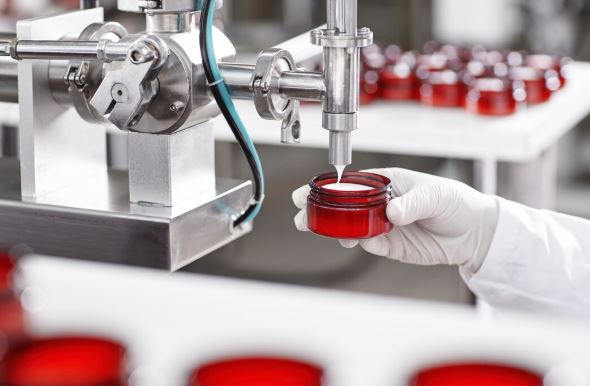
Your essential oil passes every test. Purity. Potency. Safety. You have the certificate of analysis to prove it. Then you fill it into bottles. Some bottles go to Customer A. Some to Customer B. A customer reports a problem. Which batch? Which bottle? Which filler head? You do not know. Your essential oil filling machine did not record any of that data. The problem is not your quality. It is your traceability. A modern filler records every fill. Head number. Fill weight. Date. Time. Bottle number. Batch number. Operator ID. If a customer complains, you search the record. You find the exact bottle. You trace it back to the exact moment of filling. You identify whether the problem was the oil, the bottle, or the filler. Ask your supplier about data recording capabilities. If their machine fills blind, your traceability is zero. Not low. Zero. Add serialization. Add data logging. Your certificate of analysis is worthless if you cannot connect it to the specific bottle in your customer’s hand.
The Label That Lies About Fill Date
Your label says “filled on 01/15/2025.” Your essential oil filling machine printed that label. Or your operator typed it. Or your label roll was pre-printed. None of these are trustworthy. An operator can type any date. A pre-printed roll has no connection to actual fill time. A real traceability system prints the label at the moment of filling. The filler sends the fill data to the printer. The printer applies the label with the actual date and time from the machine’s internal clock. Not a guess. Not a pre-print. Reality. Your essential oil filling machine with integrated label printing ensures every bottle carries its true history. Ask your supplier about printer integration. If they offer a printer as an add-on with no data connection, the printer is decorative. Not functional. Demand integration. Your labels should tell the truth.
The Reject Bin That Mixes Good Bottles With Bad
Your filler rejects a bottle. It goes into a bin. At the end of the shift, someone inspects the reject bin. They find some good bottles. They put them back into production. Those bottles have no record of being rejected. They have no record of being re-inspected. They have no record of being re-released. Your essential oil filling machine created a hole in your traceability. The solution is a reject bin with individual bottle tracking. Each rejected bottle is scanned. The reason for rejection is recorded. If the bottle is later re-inspected and released, that event is recorded too. The bottle’s history is complete. Ask your supplier about reject management. If their machine simply dumps bottles into a bin, your traceability stops at the reject point. Your quality system requires that any bottle removed from the line is accounted for. Not just removed. Accounted for. Demand reject tracking.
The Manual Entry That Invents Data
Your filler produces a report. Fill weights. Batch numbers. Times. Your operator reviews it. They see a missing value. They type it in. They guess. The report now contains fiction. Your essential oil filling machine should have no manual data entry. Every value comes from a sensor, a scale, or a fixed parameter. No typing. No guessing. If a sensor fails, the machine stops. It does not ask the operator to estimate. Ask your supplier about data sources. If any field on their report can be manually edited, that field is unreliable. Your quality audit will find those manual entries. Your auditor will ask for proof. You will have none. Demand fully automated data collection. Your reports will be honest. Your audits will pass.
The Shift Change That Resets The Counter
First shift fills 500 bottles. Second shift arrives. They reset the counter to zero. They fill 500 bottles. Your production record shows 500 bottles for the day. The actual total is 1000. Your essential oil filling machine should have a non-resettable totalizer. The operator cannot clear it. Only a supervisor can. With a password. With an audit trail. Your batch records should reconcile to the totalizer. If the totalizer says 1000 and your shift reports say 500, someone made an error. Or someone is hiding something. Ask your supplier about totalizer security. If any operator can reset the counter, your production data is fiction. Lock the totalizer. Your numbers will be real.
The One Audit That Finds Every Traceability Gap
Run a test batch. Fifty bottles. Use your essential oil filling machine. Record every fill. Now take one bottle from the middle of the batch. Hand it to a quality auditor. Ask them to produce the following: Fill date and time. Fill head number. Fill weight. Batch number of the oil. Operator ID. Reject history. Label print time. This is a traceability audit. If your auditor cannot find every piece of data within five minutes, your traceability system has gaps. Those gaps will be found by a regulatory auditor. The penalty is a warning letter, a fine, or a shutdown. Fix your gaps before the regulator finds them. Your essential oil filling machine is the source of fill data. It must record everything. It must store it securely. It must make it retrievable. Not sometimes. Every time. For every bottle. Your customers trust your oil. Your regulators trust your records. Your records must earn that trust. Traceability is not a feature. It is a requirement. Build it into your filling process from the start. Your future self will thank you during every audit.