
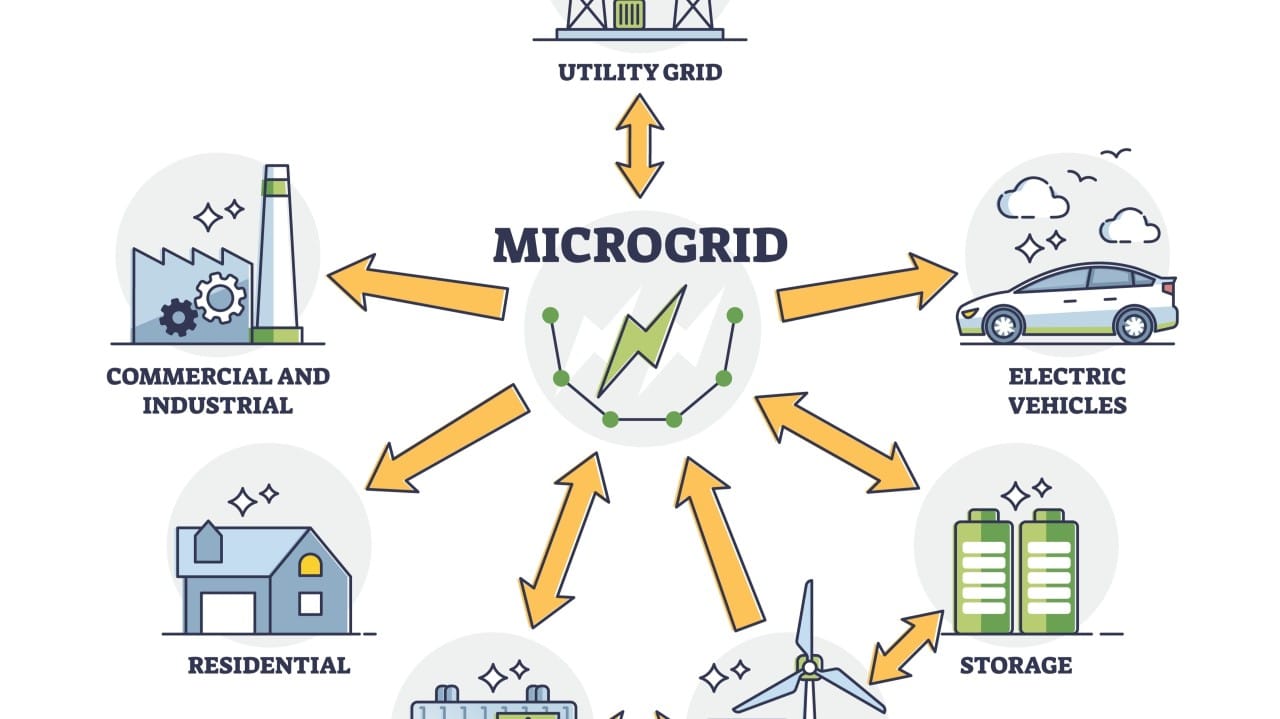
Remote communities often face unstable electricity because long transmission lines are expensive, exposed, and difficult to maintain. Harsh terrain, storms, fuel logistics, and weak grid interconnections can interrupt service for homes, clinics, farms, and telecom towers.
Reliable power becomes more important where water pumps, refrigeration, irrigation systems, and digital networks support daily survival. Operators need a modular energy architecture that combines local generation, battery storage, protection devices, and intelligent control.
Many decision-makers search for how microgrids ensure a reliable energy supply in remote areas before planning resilient infrastructure. These localized power systems help communities deploy dependable electricity closer to demand, improving continuity without relying on distant networks.
Local Generation Reduces Dependence on Distant Feeders
Remote areas need generation sources near the load center, especially where transmission extension is costly or operationally fragile. Microgrids often incorporate distributed energy resources such as solar arrays, small wind turbines, diesel generators, and battery energy storage systems.
By placing generation close to consumption points, operators reduce line losses, voltage drops, and outage exposure from distant feeders. Local generation supports clinics, schools, and water systems when regional faults or fuel delivery delays affect normal supply.
Energy Storage Keeps Critical Loads Stable
Battery storage adds operational flexibility because it stores surplus electricity and releases power during sudden demand changes. Microgrids use lithium-ion batteries, bidirectional inverters, and battery management systems to balance generation variability across remote facilities.
Storage systems help stabilize voltage and frequency, especially when renewable generation changes quickly because of clouds or wind shifts. During outages, stored energy can support priority circuits, including emergency lighting, communication devices, medical equipment, and control rooms.
Intelligent Controls Balance Supply and Demand
A reliable remote power system needs automation that can read conditions, adjust resources, and prevent instability. Microgrids employ Programmable Logic Controllers (PLC), energy management software, and Supervisory Control and Data Acquisition (SCADA) systems for coordinated operation.
These controls monitor load profiles, generator status, state of charge, feeder conditions, and power quality indicators in real time. When demand rises suddenly, control systems can start standby generation, apply load shedding, or adjust inverter output automatically.
Islanding Improves Continuity During Grid Disturbances
Remote communities need protection from upstream failures that can travel through weak distribution networks and disrupt essential services. Microgrids can separate from the main grid through controlled islanding, then continue serving local loads using available resources.
Protection relays, switchgear, synchronization panels, and transfer switches help isolate faults while maintaining safe operating boundaries. When the main grid stabilizes, synchronization controls match voltage, phase angle, and frequency before reconnecting the local network.
Protection Equipment Improves Safety and Reliability
Safe remote operation depends on coordinated electrical instrument design, fault detection, grounding, and correctly rated equipment. Microgrids require circuit breakers, Surge Protective Devices (SPDs), earthing systems, and protective relays to limit equipment damage during faults.
Coordination studies help ensure downstream devices trip first, protecting healthy feeders and reducing unnecessary outages across the network. Routine thermography, insulation resistance testing, and torque checks help maintenance teams detect weak connections before failures happen.

