
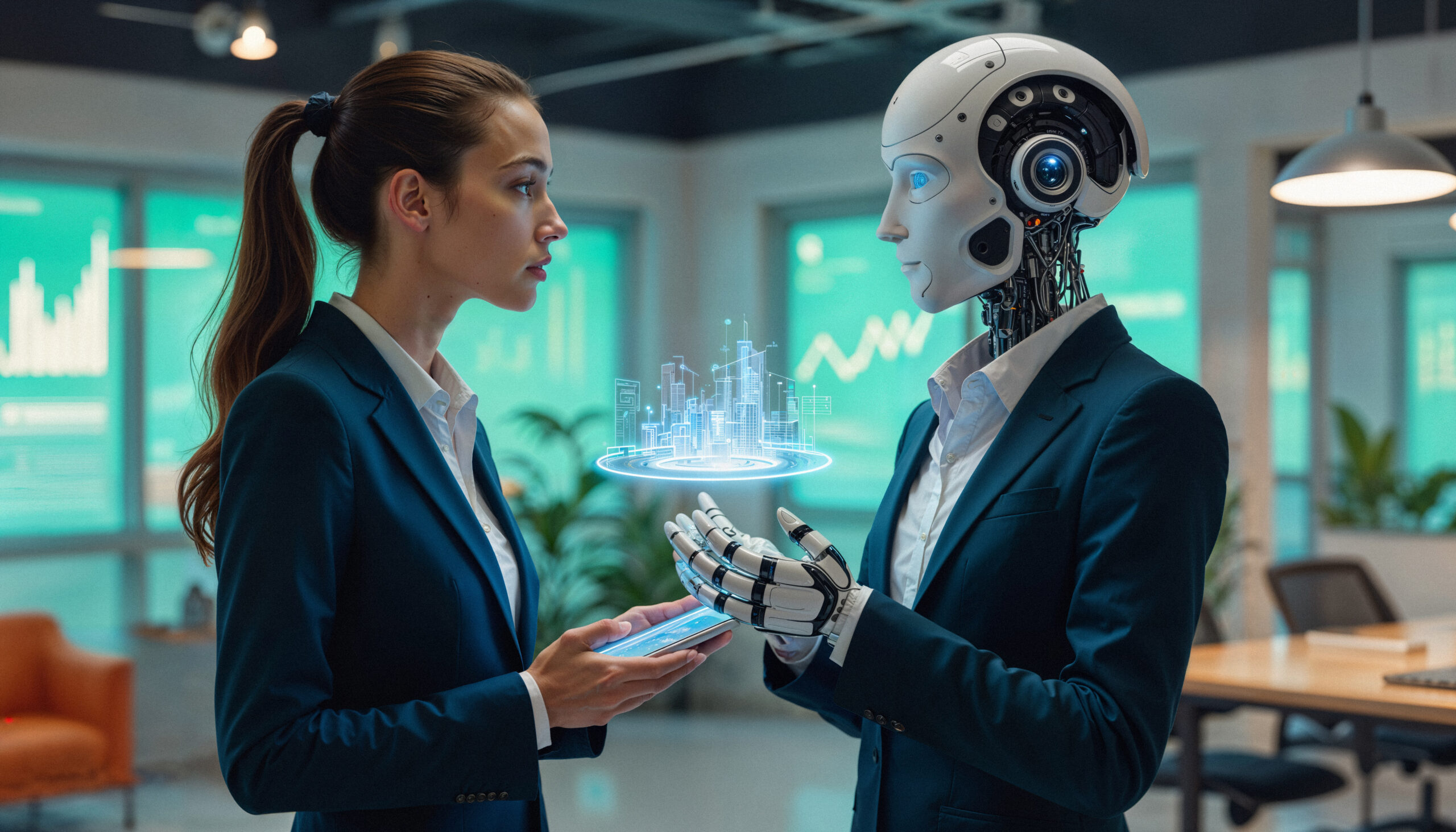
Artificial intelligence has moved beyond simple chatbots and automation tools. Today, AI agents are becoming intelligent digital workers capable of planning tasks, making decisions, using software, and collaborating with people. Businesses across industries are beginning to adopt these systems to improve productivity, reduce repetitive work, and make faster, more informed decisions.
Unlike traditional automation, AI agents can analyze situations, adapt to changing information, and complete complex workflows with minimal human input. As technology continues to evolve, these digital assistants are expected to play an even greater role in shaping the future of work.
What Are AI Agents?
AI agents are software systems designed to perform tasks independently by understanding goals, gathering information, making decisions, and taking action. Instead of following a fixed set of instructions, they can adjust their approach based on new data or changing conditions.
For example, an AI agent can:
- Schedule meetings while considering everyone's availability.
- Analyze customer feedback and prepare reports.
- Monitor inventory levels and place purchase orders.
- Assist customer support teams by resolving common issues.
- Generate business insights from large datasets.
The latest AI agents can also connect with business applications, databases, and communication tools, making them much more capable than earlier AI assistants.
Why AI Agents Matter More Than Ever
The workplace is changing rapidly. Companies are expected to do more with limited resources while maintaining high-quality customer experiences. AI agents help businesses meet these expectations by handling repetitive and time-consuming work.
Several recent developments have accelerated adoption:
Better Reasoning Abilities
Modern AI models can understand complicated requests, break them into smaller tasks, and solve problems step by step. This allows AI agents to complete workflows that previously required multiple employees.
Integration with Business Software
Today's AI agents can work alongside email systems, project management tools, customer relationship management software, and cloud applications. This enables smoother collaboration between humans and AI.
Improved Decision Support
Instead of simply generating responses, AI agents now help managers evaluate options, identify risks, and summarize important information quickly.
How AI Agents Are Transforming the Workplace
Automating Repetitive Tasks
One of the biggest advantages of AI agents is their ability to remove repetitive administrative work from employees' daily schedules.
These tasks include:
- Data entry
- Document summarization
- Invoice processing
- Appointment scheduling
- Email management
- Report generation
Employees can then spend more time solving problems, building relationships, and developing new ideas.
Enhancing Customer Service
Customer service has changed significantly with AI-powered agents.
Instead of only answering basic questions, modern AI agents can:
- Understand customer history.
- Resolve common issues.
- Recommend suitable solutions.
- Escalate complex cases when necessary.
- Provide support around the clock.
This creates faster response times while reducing pressure on human support teams.
Supporting Better Decision-Making
Business leaders often deal with enormous amounts of information. AI agents can process large datasets within minutes and present meaningful summaries.
They help organizations identify:
- Market trends
- Sales opportunities
- Operational inefficiencies
- Customer behavior patterns
- Financial performance indicators
Rather than replacing decision-makers, AI agents provide clearer information that supports smarter choices.
AI Agents Across Different Industries
Healthcare
Healthcare organizations use AI agents to organize patient records, assist with appointment scheduling, support medical documentation, and help professionals review clinical information more efficiently.
While human expertise remains essential, AI reduces administrative workloads and improves operational efficiency.
Finance
Financial institutions increasingly rely on AI agents for fraud detection, compliance monitoring, risk analysis, and customer support.
Businesses following developments through fin-techasia have noticed how AI continues to reshape financial services by improving speed, accuracy, and operational resilience.
Manufacturing
Manufacturers use AI agents to monitor production lines, predict equipment maintenance, optimize supply chains, and improve quality control.
The ability to identify potential problems before they become costly failures helps reduce downtime.
Marketing
Marketing teams use AI agents to:
- Analyze campaign performance
- Create personalized customer experiences
- Identify audience segments
- Generate content ideas
- Optimize advertising strategies
This allows marketers to focus more on creativity and long-term planning.
The Rise of Multi-Agent Collaboration
A major trend in 2026 is the development of multi-agent systems.
Instead of relying on one AI assistant, businesses deploy several specialized AI agents that work together.
For example:
- One agent researches information.
- Another analyzes data.
- A third creates reports.
- A fourth communicates results.
This collaborative approach enables organizations to complete large projects more efficiently while maintaining accuracy.
As businesses continue experimenting with these systems, industry events covered by The Expotab often highlight how companies are integrating multiple AI agents into everyday operations.
Skills Employees Need in the AI Era
AI agents are changing job roles rather than simply replacing workers.
The most valuable skills now include:
Critical Thinking
Employees must evaluate AI-generated recommendations and determine whether they make sense in real-world situations.
Creativity
Human creativity remains difficult to automate. Innovation, storytelling, product design, and strategic thinking continue to require original ideas.
Communication
Professionals who can clearly communicate with both people and AI systems will have a significant advantage.
Writing effective prompts, reviewing outputs, and collaborating with AI tools are becoming essential workplace skills.
Continuous Learning
AI technology evolves rapidly.
Professionals who regularly update their knowledge will adapt more successfully as workplaces continue changing.
Challenges Businesses Must Address
Despite their advantages, AI agents also introduce new challenges.
Data Security
Organizations must protect sensitive customer and business information when AI systems access internal data.
Strong security policies remain essential.
Accuracy
AI agents may occasionally generate incorrect conclusions or misunderstand complex situations.
Human review continues to play an important role, particularly for legal, financial, and healthcare decisions.
Ethical Use
Businesses should ensure AI is used responsibly, avoiding unfair bias and maintaining transparency whenever automated decisions affect customers or employees.
Workforce Adaptation
Introducing AI agents requires thoughtful planning.
Companies that invest in employee training often achieve better results because staff members learn how to collaborate effectively with AI rather than compete against it.
What the Future Looks Like
AI agents are becoming increasingly autonomous.
Future systems are expected to:
- Complete longer and more complex projects independently.
- Work together across multiple departments.
- Learn continuously from business processes.
- Deliver highly personalized customer experiences.
- Support strategic planning with real-time insights.
Rather than functioning as simple software tools, AI agents will increasingly become trusted digital teammates that assist employees throughout the workday.
Organizations that successfully combine human expertise with intelligent automation are likely to gain stronger productivity, faster innovation, and improved customer satisfaction.
Conclusion
AI agents are reshaping the future of work by taking on repetitive tasks, improving decision-making, and helping businesses operate more efficiently. Their ability to reason, adapt, and collaborate with existing software makes them far more powerful than traditional automation systems.
The workplace of the future will not be defined by humans versus AI. Instead, success will come from effective collaboration between people and intelligent digital agents. Companies that embrace this partnership while maintaining strong security, ethical standards, and employee development will be better prepared for the next generation of business transformation.
As AI capabilities continue advancing, organizations of every size have an opportunity to rethink how work is performed, allowing employees to focus on innovation, problem-solving, and delivering greater value where human expertise matters most.

