
Training Isn’t Disappearing, It’s Just Changing Shape
Industrial training used to feel pretty straightforward. After sitting in a room, or a stack of slides, paying close attention, and perhaps asking a few questions, you’ll finally enter a real site and try to stay up with everyone else. And that was the way it worked for a very long period.
However, anyone who has really worked on a busy site or stood close to heavy machinery will attest to the fact that performing anything safely in real life differs greatly from comprehending it in theory. That gap has always existed; it was simply not discussed much. Now it is.
What’s changing today isn’t about replacing people or experience. It’s more about giving learners a safer “middle space” where they can learn, fail, repeat, and improve before anything real is at risk. You can already see this shift in places like construction sites, warehouses, factories, and energy plants.
Learning Is Starting to Feel Like Doing, Not Just Watching
A big reason for this shift is a group of technologies often called Extended Reality such as Virtual Reality (VR), Augmented Reality (AR), and Mixed Reality (MR). The names sound technical, but what they actually do is surprisingly practical.
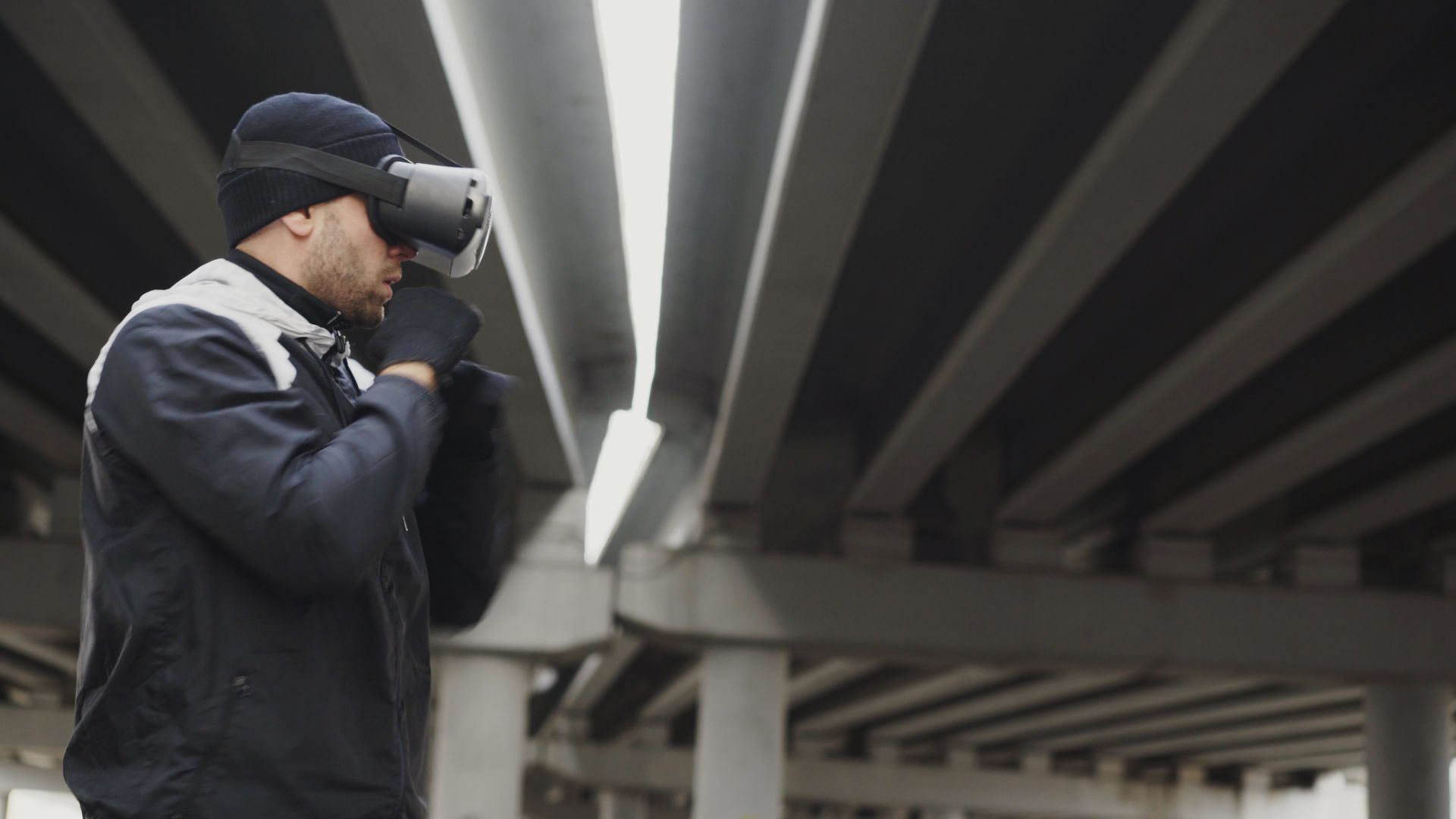
VR is probably the easiest to picture. A trainee puts on a headset and suddenly they’re inside a workshop or control room. It feels real enough that people often forget it’s not. The real value, though, isn’t the visuals. It’s the repetition. You can run the same task ten times, twenty times, even fifty times, without pressure building up around mistakes.
AR feels more natural in a different way. Instead of replacing the real world, it just adds small layers of help on top of it. Imagine standing next to a machine and seeing a faint arrow pointing to the exact lever that needs adjusting, or a warning hovering near a hot surface. It doesn’t interrupt the work; it quietly supports it.
MR sits somewhere in the middle. Real tools stay in your hands, but digital instructions or models appear in the same space. It may make difficult steps seem easier to handle and less difficult for jobs like maintenance or assembly, almost as if someone is standing next to you and assisting you without taking control. It’s very important to remember that none of this eliminates practical training. It just changes when people first get exposed to it.
Why This Shift Is Happening In The First Place
Most of this change isn’t happening because it looks impressive. It’s happening because the old way has limits that are hard to ignore.
One of the biggest reasons is simple: mistakes in training are expensive. In real environments, mistakes don’t just slow things down; they can damage equipment, stop production, or put people at risk. In virtual environments, those same mistakes become part of learning instead of consequences.
There’s also the confidence factor. A PwC study found that VR-based learners often train faster and feel more prepared when they step into real environments. That confidence isn’t just a “nice to have.” In practical settings, hesitation can be just as risky as a lack of knowledge.
Safety is another obvious piece of the puzzle. Some procedures are difficult to teach safely in a real setting. Simulations allow people to go through those situations without actual danger, but still build the right response over time.
Cost also plays a quieter role. Real equipment is expensive to use for training. It needs maintenance, supervision, and downtime. Simulation takes a lot of that pressure away, especially in early learning stages.
And then there’s something more practical: location. Teams are no longer always in the same place. Digital training makes it possible for people in different regions to go through the same learning experience at the same time.
How Training Actually Unfolds In Real Workplaces
Most modern training doesn’t rely on a single method anymore. It usually builds up in stages, almost like learning in layers without rushing anything. It starts fairly simply. Basic theory is delivered through digital learning platforms. This is where people learn the “what” such as safety rules, equipment names, and basic procedures. It’s the foundation, nothing more.
Then things become more hands-on through VR simulations. This is where repetition starts to matter. Tasks are done again and again until they stop feeling new. Mistakes happen freely here, and that’s actually the point. There’s no damage, no pressure, just learning through doing.
After that, trainees move into real environments but not alone. There’s supervision, guidance, and a slower pace. This is usually the point where everything they practised starts to feel connected.
Over time, AR tools sometimes stay in the background during live work. Not as a replacement for skill, but as support. A reminder here, a prompt there, especially when the task becomes complex or time-sensitive.
Certification Still Carries Real Weight
Even with all these digital tools, one thing hasn’t really changed in any meaningful way: real-world proof still matters. No simulation can fully replace the responsibility of actually working with equipment in real conditions. At some point, someone has to show they can do the job safely when it actually counts.
That’s especially true in access and lifting work, where safety standards are strict and mistakes can have serious consequences. Even with advanced simulations, hands-on certifications like IPAF training remain a core requirement in ensuring operators meet industry safety expectations alongside digital preparation methods.
Rules and Standards Aren’t Standing Still Either
Regulators aren’t ignoring these changes. They’re adapting alongside them. The UK Health and Safety Executive continues to set clear expectations around safe working practices and structured training systems:
OSHA also keeps reinforcing the importance of continuous training and awareness in workplaces where risks are part of everyday operations. So even as training methods become more modern, the core idea hasn’t changed much: people still need to be properly prepared before they’re placed in real working conditions.
Closing Thought
Industrial training is not being replaced by technology, and it’s not becoming less human either. If anything, it’s becoming more careful about how people learn. VR, AR, and MR give space to practice without pressure. Real environments give meaning to that practice. Certification makes sure nothing gets lost in between.
The result is a quieter but more thoughtful system where learning doesn’t jump straight into reality, but walks into it step by step until it finally feels natural.

