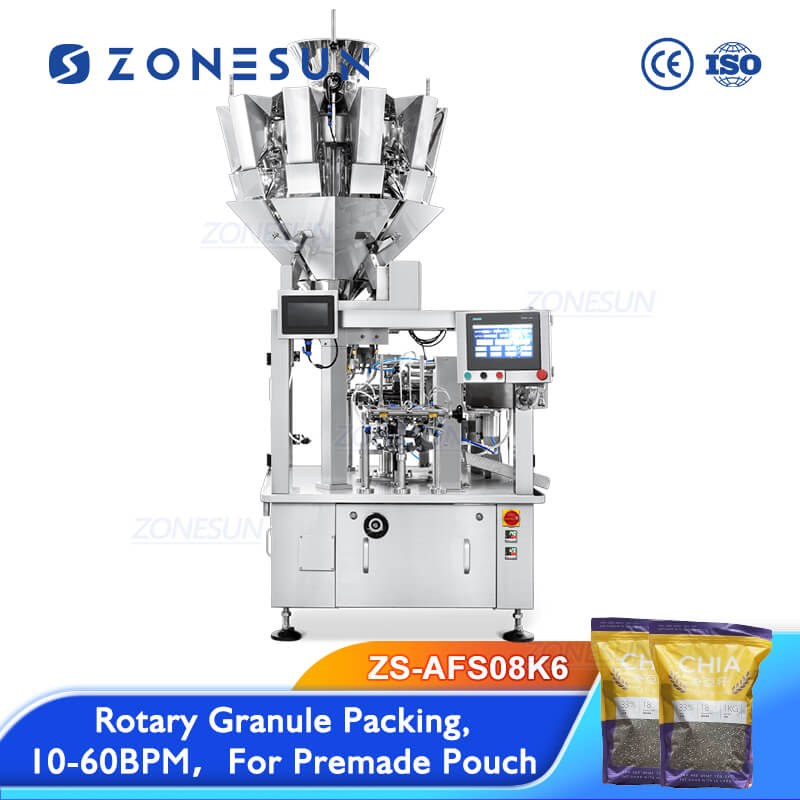
Your bag is open. The nozzle enters. The bag falls off the clamp. Product sprays everywhere. Your operator stops the line. They reset the bag. They restart. The bag falls again. The problem is not the operator. It is the bag clamp design. A good automatic weighing filling machine uses a mechanical or pneumatic clamp that holds the bag securely regardless of bag thickness, material stiffness, or static charge. A bad clamp uses spring pressure or friction. The bag slips. Manufacturers sourcing packaging from suppliers such as Bags Market know that bag materials can vary significantly, making a reliable clamp system essential. Ask your supplier about their clamp mechanism. Ask to see it operate with your actual bags. Thin bags. Thick bags. Bags with static. Bags with slippery film. If the clamp drops any of them, the clamp is not good enough. Your production line cannot stop every third bag for a re-clamp. Demand a clamp that grips every time.
The Nozzle Fines That Blow Back Into Your Face
Your nozzle fills the bag. Air inside the bag needs to escape. It escapes around the nozzle. It carries fine dust with it. That dust blows into your operator’s face. It settles on their clothes. It coats their safety glasses. Your automatic weighing filling machine without dust control is a health hazard and a housekeeping nightmare. The solution is a dust collection port integrated into the nozzle. Air and dust are pulled away from the operator. Not into their breathing zone. Ask your supplier about dust management. If they say “your operator should wear a mask,” they have given up on clean operation. Your operator deserves better. Your factory floor deserves better. Specify a nozzle with active dust collection. Your team will breathe easier. Your cleanup will take minutes instead of hours.
The Bag Neck Wrinkle That Creates A Leak Path
Your bag seals. The seal looks good. Then product leaks. Slowly. A trickle. The problem is a wrinkle in the bag neck. The nozzle stretched the film. The film did not lay flat. The sealer compressed the wrinkle. It did not fuse. Product finds the path. A automatic weighing filling machine with a bag neck straightener prevents this. Fingers or paddles smooth the film before the seal. The bag neck is flat. The seal is complete. No leaks. Ask your supplier about bag neck conditioning. If their nozzle simply inserts and fills, your bag necks will wrinkle. Your seals will leak. Your customers will receive bags that are sticky, greasy, or partially empty. Add a neck straightener. Your seals will finally be reliable.
The Static Cling That Refuses To Let Go
Your bag fills. The automatic weighing filling machine releases it. The bag sticks to the nozzle. Static electricity holds it. The next bag arrives. It hits the stuck bag. Both fall. Product spills. Your operator cleans up. The problem is static. Plastic film against plastic nozzle creates charge. The bag does not want to leave. The solution is an anti-static nozzle coating or a static elimination system at the discharge point. A puff of ionized air breaks the static bond. The bag drops cleanly. Ask your supplier about static release. If they have never considered it, your bags will stick. Not every bag. Just enough to frustrate your operator and slow your line. Specify static control. Your bags will drop. Your line will flow.
The Bag Length Variation That Confuses Your Sensor
Your bags come from a roll. The film thickness varies. The cut length varies. Your sensor detects the bag bottom. It tells the filler when to stop lowering the nozzle. If the bag is longer than expected, the nozzle hits the bottom. It tears the bag. If the bag is shorter, the nozzle stops too high. Product misses the bag. Your automatic weighing filling machine needs a sensor that measures bag length on the fly. Not a fixed position. Ask your supplier about bag length compensation. If their machine assumes all bags are identical, your film supplier will prove them wrong. Bags vary. Your filler must adapt. Sensor-based length measurement is not optional. It is essential for reliable filling.
The One Test That Finds Every Bag Handling Problem
Run your automatic weighing filling machine for one hour with your actual bags. Not perfect bags from a sample roll. Production bags from your current inventory. Record every failure. Bag drop. Bag tear. Bag stick. Bag wrinkle. Bag length mismatch. Count the failures. Divide by total bags run. That number is your bag-related downtime percentage. Now ask your supplier what that number should be. A well-designed machine achieves less than 0.5 percent bag-related failures. That is one failure per two hundred bags. If your test shows five percent or more, your machine is fighting your bags. Not filling them. The fix is better bag handling design. Better clamps. Better dust control. Better neck straightening. Better static elimination. Better length sensing. Your bags are not the enemy. They are the package. Your automatic weighing filling machine must handle them gently, consistently, and quickly. Test before you buy. Use your actual bags. Observe every failure. Demand a machine that succeeds where others fail. Your production line depends on reliable bag handling. Not sometimes. Every bag. Every shift. Every day. That is the standard. Hold your supplier to it.